
The Promise Institute
for Human Rights (Europe) News

We are pleased to share our 2025–2026 Annual Report, offering an overview of our work, achievements, and developments over the past year and between our two locations, at a time when the international human rights system is under strain worldwide.
The Promise Institute is working to meet these challenges through education, legal advocacy, and scholarship. We are expanding our courses, continuing the work of our clinical teams at home and abroad, and developing materials to promote accountability for the human rights impact of environmental destruction as the climate crisis accelerates. Throughout, we remain committed to centering traditionally marginalized voices and placing affected communities first.
We thank Professor of Law Anna Spain Bradley for her leadership as Faculty Director and welcome Professor Kal Raustiala to the role. We are also delighted to welcome incoming Los Angeles Executive Director Hadar Harris. A UCLA Law alumna and longtime advocate for justice, equity, and human rights, Harris brings more than two decades of experience in over 25 countries.
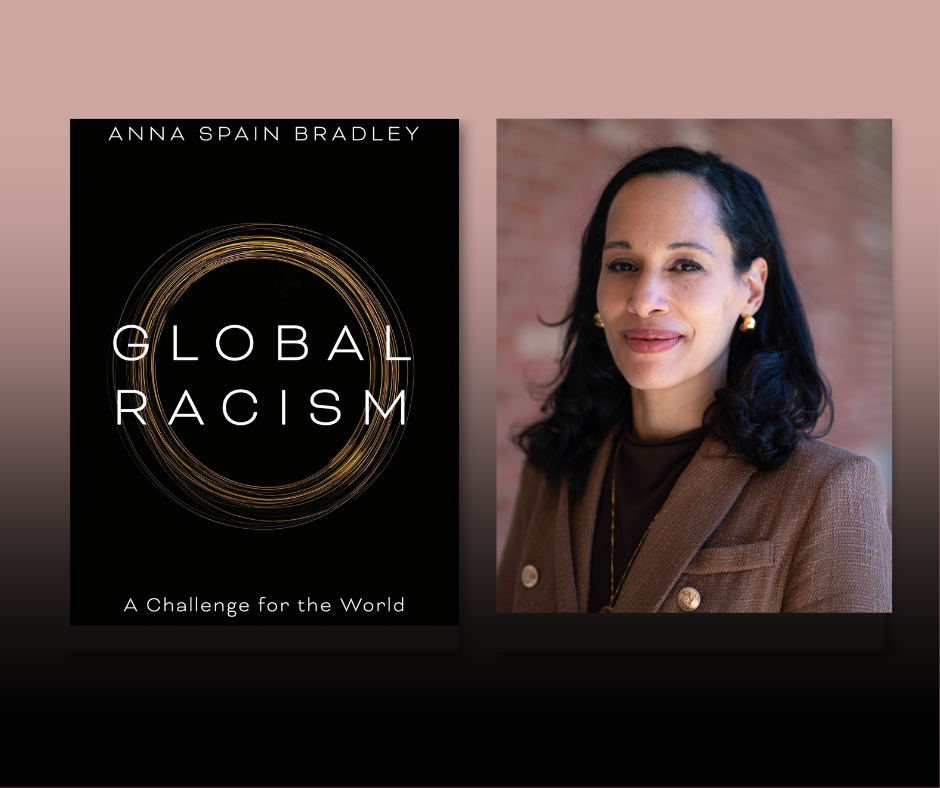
Global Racism: A Challenge for the World
What do different experiences of racism around the world have in common and what can we do about it?
In her new book, Global Racism: A Challenge for the World, Professor Anna Spain Bradley looks at racism beyond national borders. From discrimination against Roma children in European schools to anti-Black racism in the United States and violence against Indigenous peoples in other parts of the world, she shows how different forms of racism are linked by shared histories, ideas and systems of inequality.
Join us for Anna’s book presentation on 19 November at Boekhandel Athenaeum in Amsterdam.
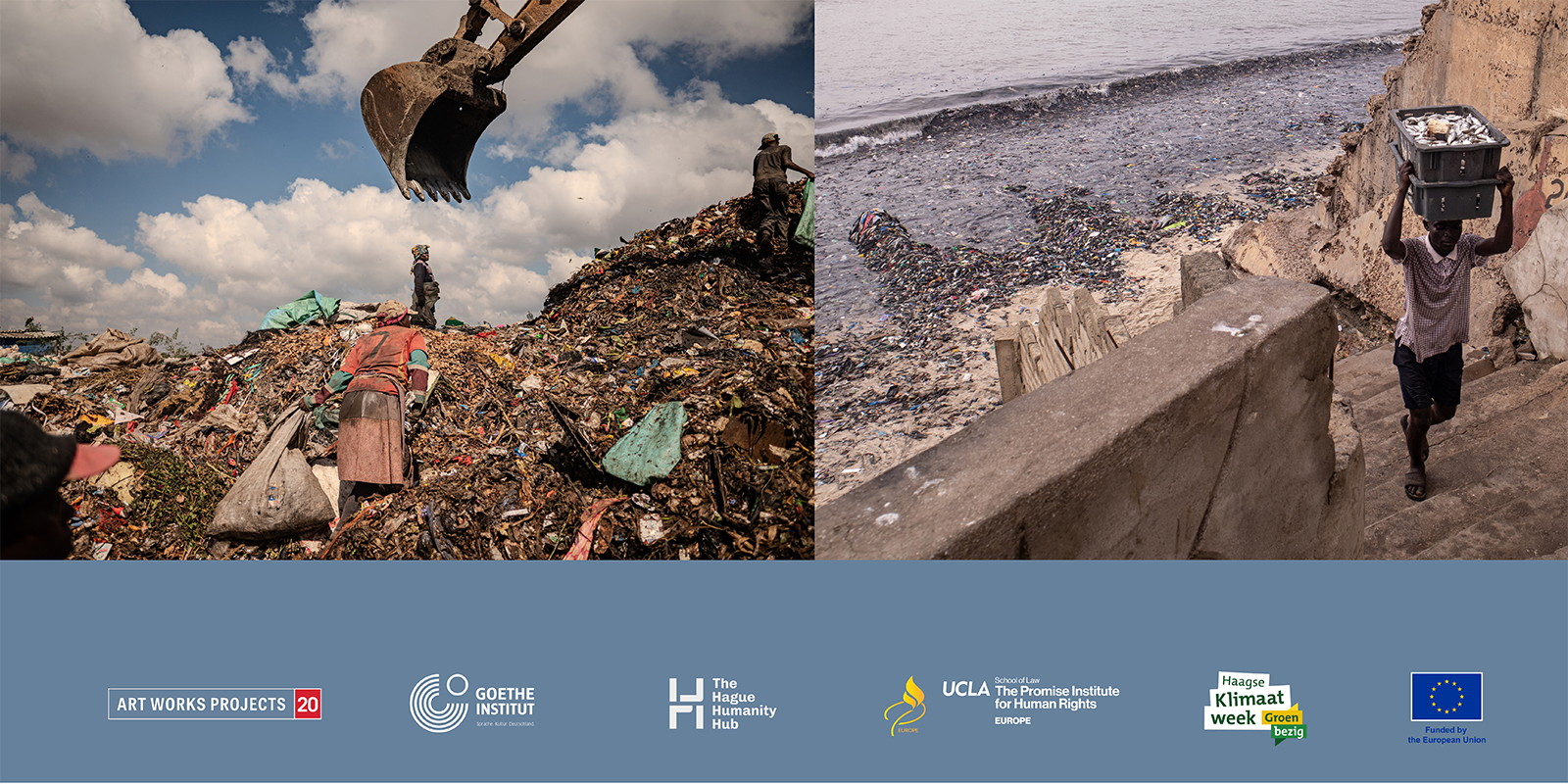
Photography meets International Law and Climate Action
How can we make better use of existing international criminal law to address environmental destruction, and what could recognizing ecocide as a distinct crime add to the pursuit of accountability?
Join us on 2 November at The Hague Humanity Hub for AWP / NOW: Environmental Harm as an International Crime, an evening where documentary photography meets international law, climate action, and the movement to recognize ecocide as a distinct international crime.

3rd Annual Judging International Justice Lecture featuring ICJ Judge Hilary Charlesworth in conversation with Professor Anna Spain Bradley
Join us for the 3rd annual Judging International Justice lecture, featuring Judge Hilary Charlesworth of the International Court of Justice in conversation with UCLA Law Professor Anna Spain Bradley.
18 November, 18:00-19:00
T.M.C. Asser Institute, The Hague
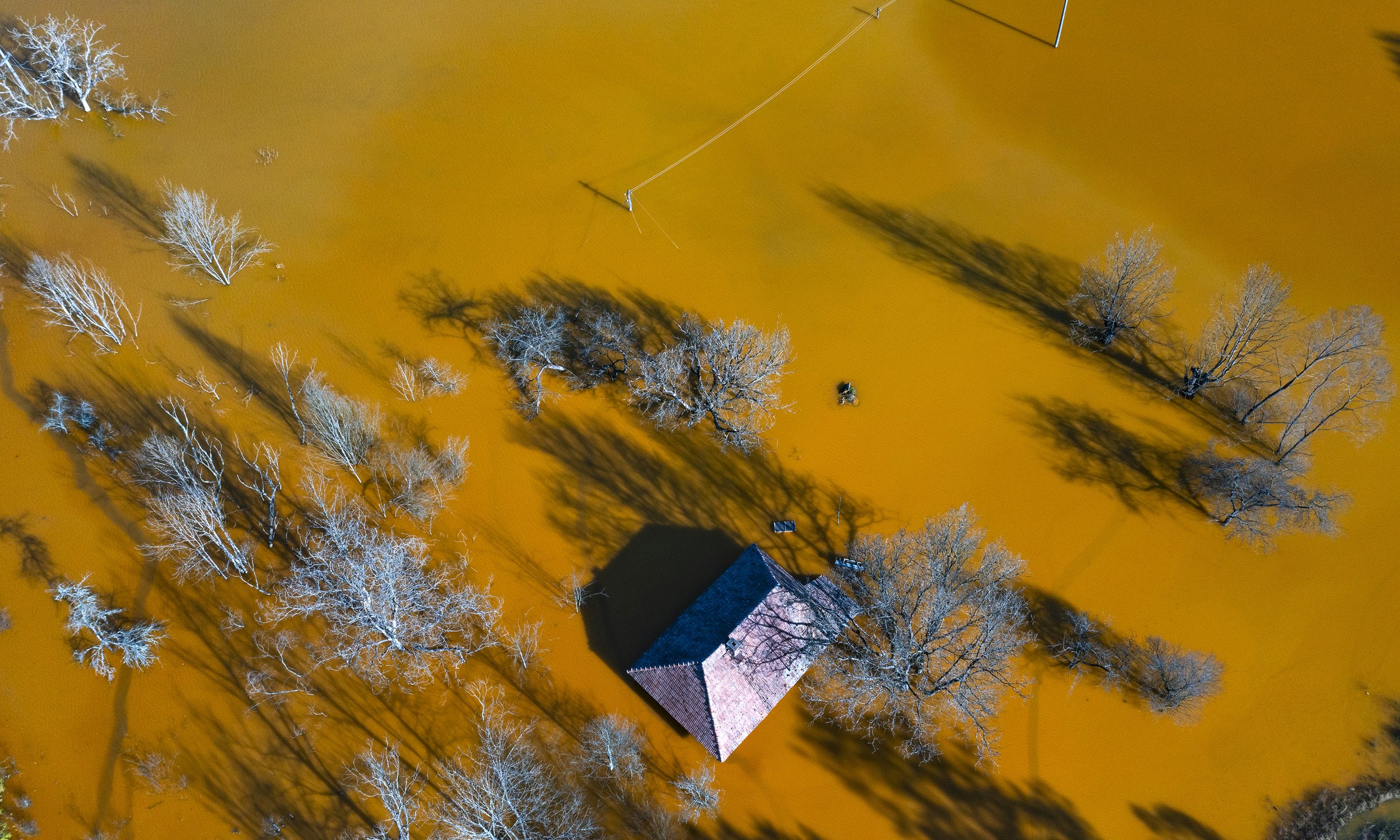
Prosecuting International Environmental Crimes - A Geneva Security Debate
International criminal law is the most under-used tool in the fight against environmental damage and climate harm. It has built a substantial practice for prosecuting atrocities against persons, but nothing comparable exists for the natural environment.
This is partly a matter of law: the framework is more developed in wartime than in peacetime, and incomplete even where it exists, which is why the movement to criminalise ecocide has gained such force. But it is also a matter of practice. No prosecutor, international or, until recently, national, has ever indicted anyone for an international environmental crime: not for want of law, but because the expertise needed to recognise environmental destruction as a crime, charge it in terms that withstand judicial scrutiny, and prove it in court has not been developed or shared.
Special Issue on Ecocide, Human Rights and Environmental Justice
We are excited to share the Special Issue of The International Journal of Human Rights on Ecocide, Human Rights and Environmental Justice, edited by Kate Mackintosh, Lisa Oldring, Darryl Robinson and Damien Short.
The articles are arranged around three themes: Corporations, Colonialism and Indigenous struggle; Accountability and Repair: Defining Justice for Ecocide and Human Rights and Environmental Stewardship. The collection serves as a resource for the scholars, advocates, practitioners and policymakers who are shaping the emerging field of ecocide law and the overarching challenge of environmental justice.
ASIL Lieber Society Event (Online) Prosecuting Environmental Harm as International Crimes
International criminal law is the most under-used tool in the fight against environmental damage and climate harm. Serious environmental destruction is too often treated as an unfortunate by-product of conflict or industrial activity, when it may in fact constitute an international crime.
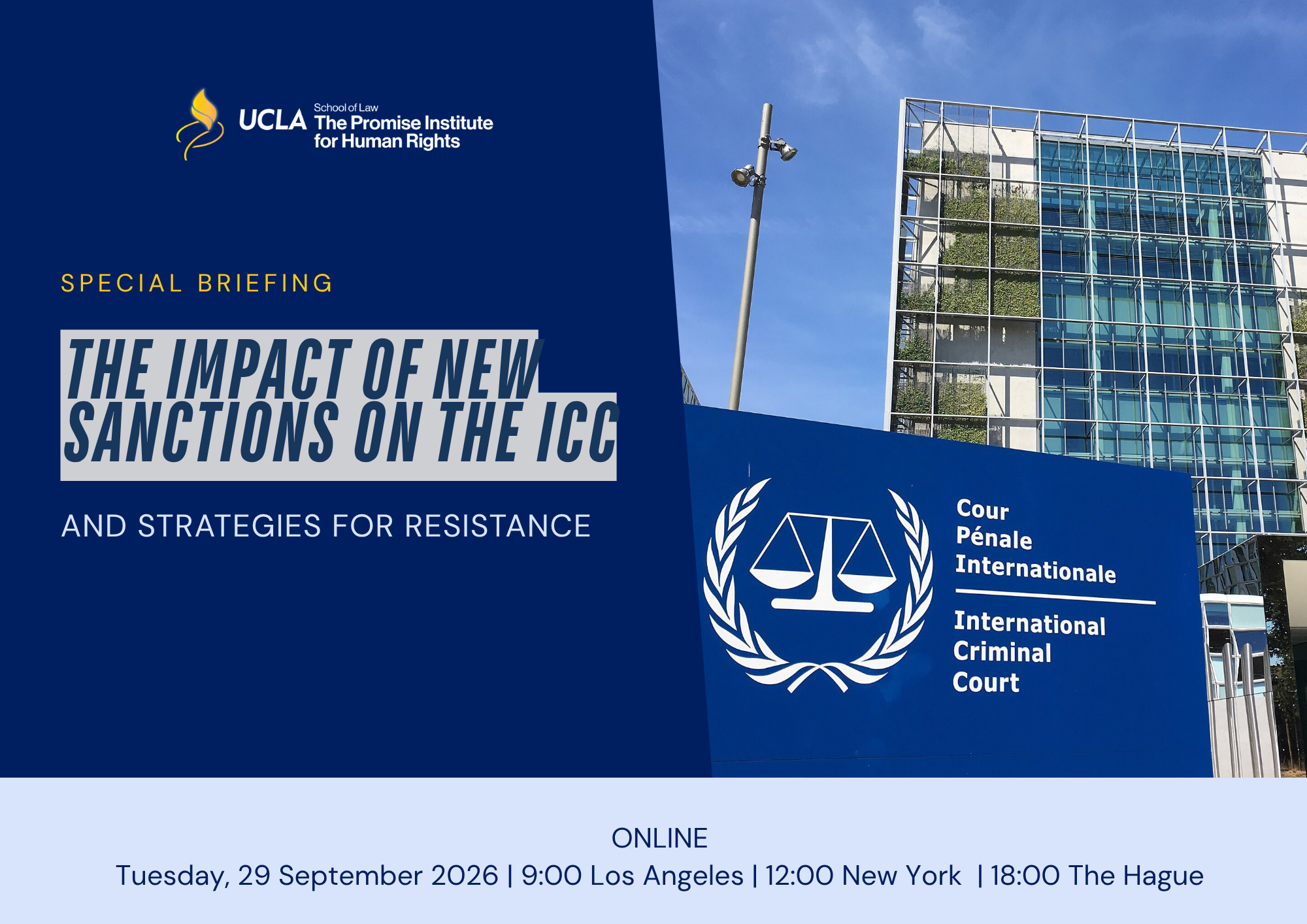
Recording of the Special Briefing on the Impact of New ICC Sanctions and Strategies of Resistance
The recording is now available to watch and share with your network.
The speakers share their knowledge of the impact of the sanctions and strategies for resistance from their expert perspectives and provided insights on how the sanctions are viewed outside the US.
Manual on Prosecuting International Environmental Crimes
The manual lays out the legal architecture for prosecuting environmental destruction as an international crime, and shows how to apply this in practice.
It offers a step-by-step guide to what can be done within existing legal frameworks, while building the practical foundations any future law will also require. The manual provides prosecutors and investigators confronting unlawful environmental destruction, in any jurisdiction and in war or peace, with practical frameworks for identifying, framing, and building cases. It includes five case studies that illustrate real-world, present-day examples of environmental crime.
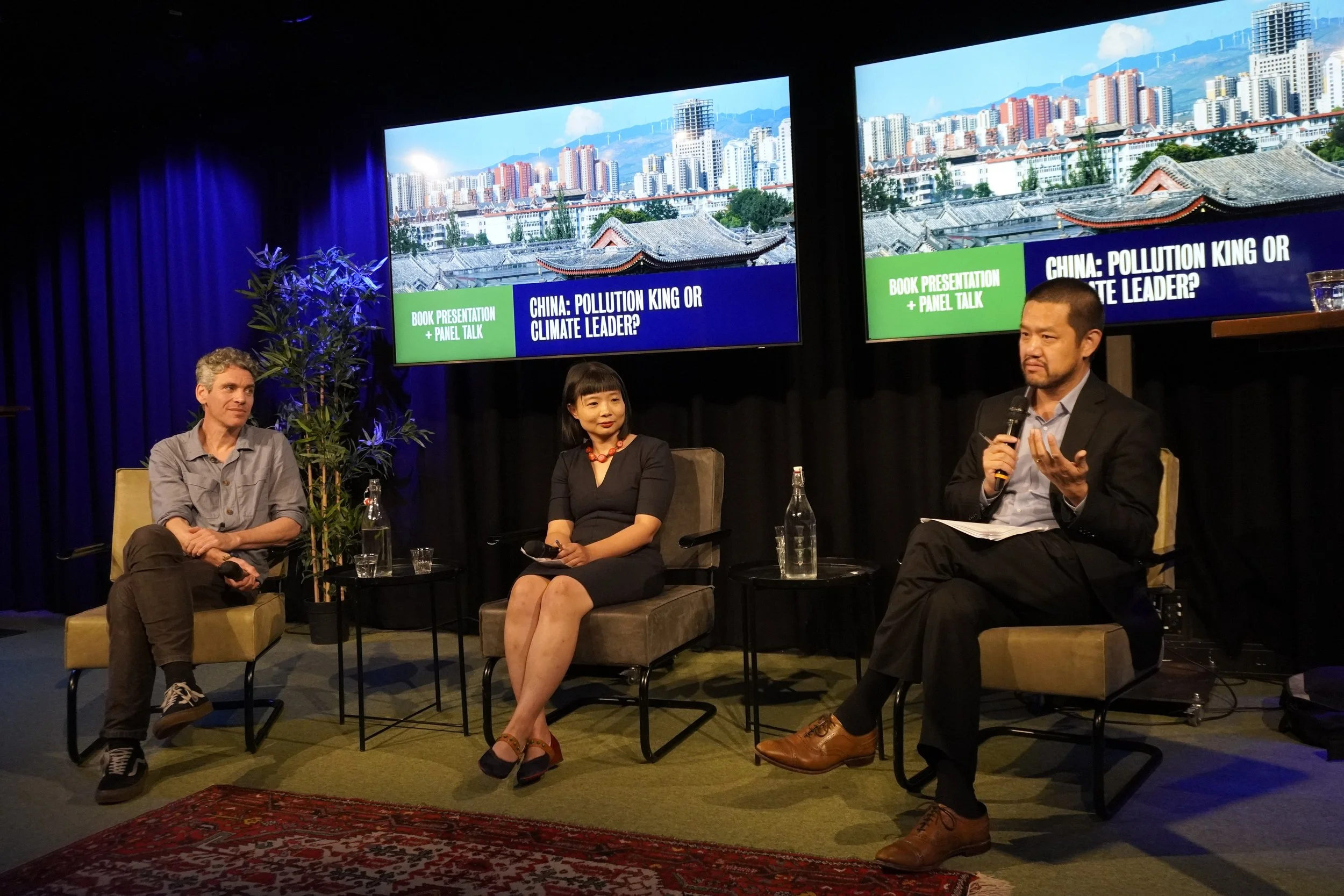
UCLA Law Prof. Alex Wang visits Amsterdam and The Hague
Last week, our affiliated faculty Prof. Alex Wang visited us for three events hosted by the Leiden Asia Centre, the University of Amsterdam's interdisciplinary institute SEVEN, and cultural debate centre Pakhuis de Zwijger in Amsterdam.
A huge thank you to China experts Prof. Shiming The discussions centred on the themes of Alex's newly published book Chinese Global Environmentalism (Cambridge University Press, 2026) — exploring how China has shifted from being seen as an environmental laggard to making its green ambitions a pillar of global power, and what that means for international governance, geopolitics, and development cooperation.
EU Environmental Crime Directive Deadline: Which States Are Ready?
The EU Environmental Crime Directive deadline is here! Are we ready?
As of the 21st of May 2026, EU member states must have the Environmental Crime Directive transposed into national law, with new criminal offences, tougher penalties, and a qualified offence for the most catastrophic harm: destruction so widespread and irreversible it reaches the level of ecocide.

Chinese Global Environmentalism - UCLA Law Prof. Alex Wang visits The Netherlands
In the race to save the planet, Beijing is moving at a speed the West can’t match. China the world’s biggest polluter, has rapidly transformed into its greatest green hope, rewriting the rules of the climate fight through sheer, top-down force.
From enormous solar power farms to the total domination of the electric vehicle market, the ‘Green Dragon’ is outpacing us all.
Humans Matter Too!
The third in the series of new articles from our upcoming Special Issue of the International Journal for Human Rights on Ecocide, Human Rights and Environmental Justice, is certainly not the least. In his article, Darryl Robinson, Professor of Law at Queen's University, challenges a fundamental misunderstanding that has taken hold in Ecocide scholarship.
Much of the academic literature has treated any consideration of human well-being as inherently "anthropocentric" and therefore suspect. Robinson argues this is simply wrong.
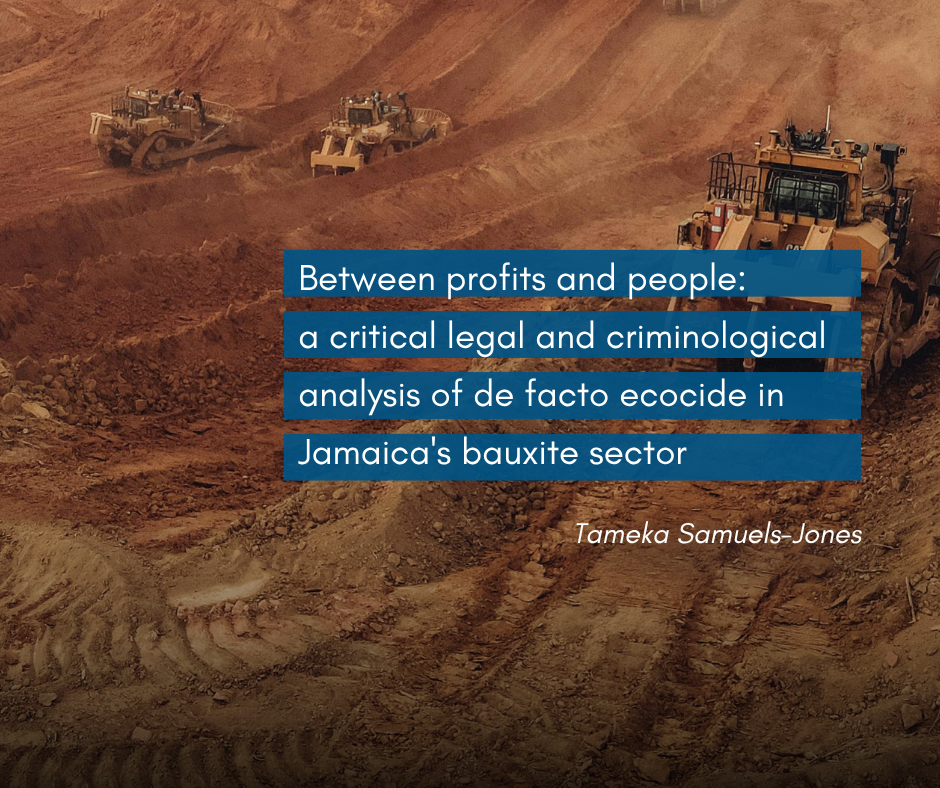
Between Profits and People: A Critical Legal and Criminological Analysis of De Facto Ecocide in Jamaica’s Bauxite Sector
This article examines how Jamaica, as a Small Island Developing State (SIDS), faces disproportionate environmental harm from resource extraction by multinational corporations, compounded by climate-related disasters such as the devastating Category 5 Hurricane Melissa in 2025.
Against the backdrop of the absence of ecocide as a codified international crime and Jamaica not being a State Party to the ICC, Dr. Samuels-Jones explores how systematic environmental destruction, conceptualised as de facto ecocide, can be legally addressed.
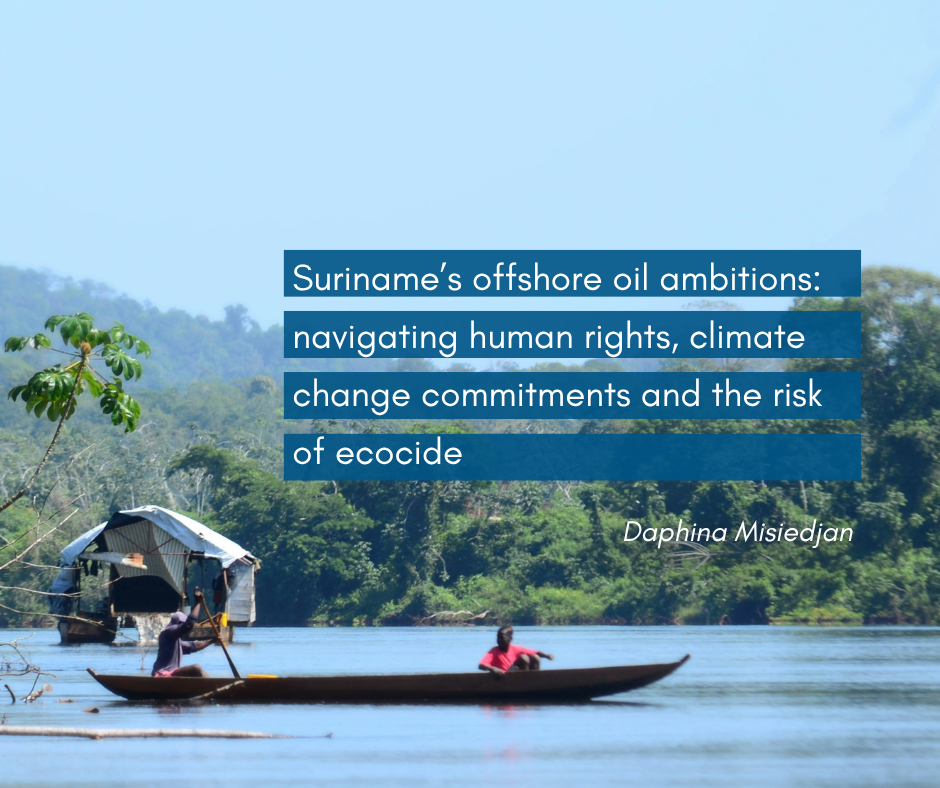
Suriname’s offshore oil ambitions: navigating human rights, climate change commitments and the risk of ecocide
In Suriname’s offshore oil ambitions: navigating human rights, climate change commitments and the risk of ecocide, Daphina Misiedjan, Ph.D. examines how Suriname stands at a critical crossroads.
While offshore oil development offers major economic opportunities, it also poses serious risks to fragile marine ecosystems, low-lying coastal regions, and Indigenous communities.

Amicus Brief on Carbon Markets to the African Court of Human and Peoples’ Rights
Experts and researchers from The Promise Institute, along with colleagues from Climate Counsel, Sudan Human Rights Hub, and SOMO, have submitted an amicus brief to the African Court on Human and Peoples’ Rights on the human rights impacts of carbon markets in the context of climate change.
Carbon offset projects in Africa are often presented as a climate solution: turning forests, soil, and land into carbon credits that can be sold to offset emissions elsewhere. In reality, many of them are deeply flawed, and our submission raises urgent concerns.
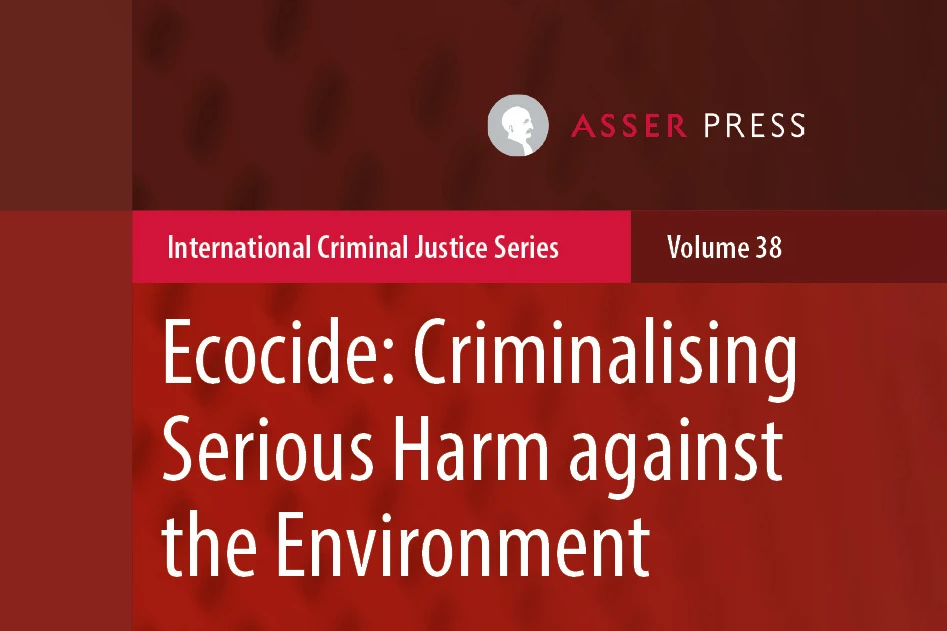
The Crime of Ecocide Through Human Rights: Towards Environmental Protection and Justice
We are delighted to share the publication of the edited volume Ecocide: Criminalising Serious Harm against the Environment (T.M.C. Asser Press / Springer Law, 2026), edited by Christophe Paulussen et al. Our senior fellow Lisa Oldring and executive director, Kate Mackintosh contributed Chapter 5, The Crime of Ecocide Through Human Rights: Towards Environmental Protection and Justice.

Hadar Harris is the new ED of our Los Angeles Office!
We are thrilled to welcome Hadar Harris to The Promise team!
Hadar is a longtime advocate for justice, equity, and human rights. She will join The Promise Institute for Human Rights at UCLA as executive director of our Los Angeles location. Her appointment marks a homecoming to UCLA Law, where she earned her J.D. and founded the school’s first ACLU chapter!

Pro Bono - First UN Report on the Right to Sanitation
Earlier this month, 11 UCLA Law students met with UN Special Rapporteur on the Right to Water and Sanitation, Mr. Pedro Arrojo-Agudo, and his legal team. Under the guidance of UCLA Law alum and our Legal Advisor, Amanda Brown, they began research for his upcoming report to the UN General Assembly on the human right to sanitation without discrimination. As all previous reports have focused on the right to water, this will be the first time that this aspect of the mandate is addressed by the Special Rapporteur.
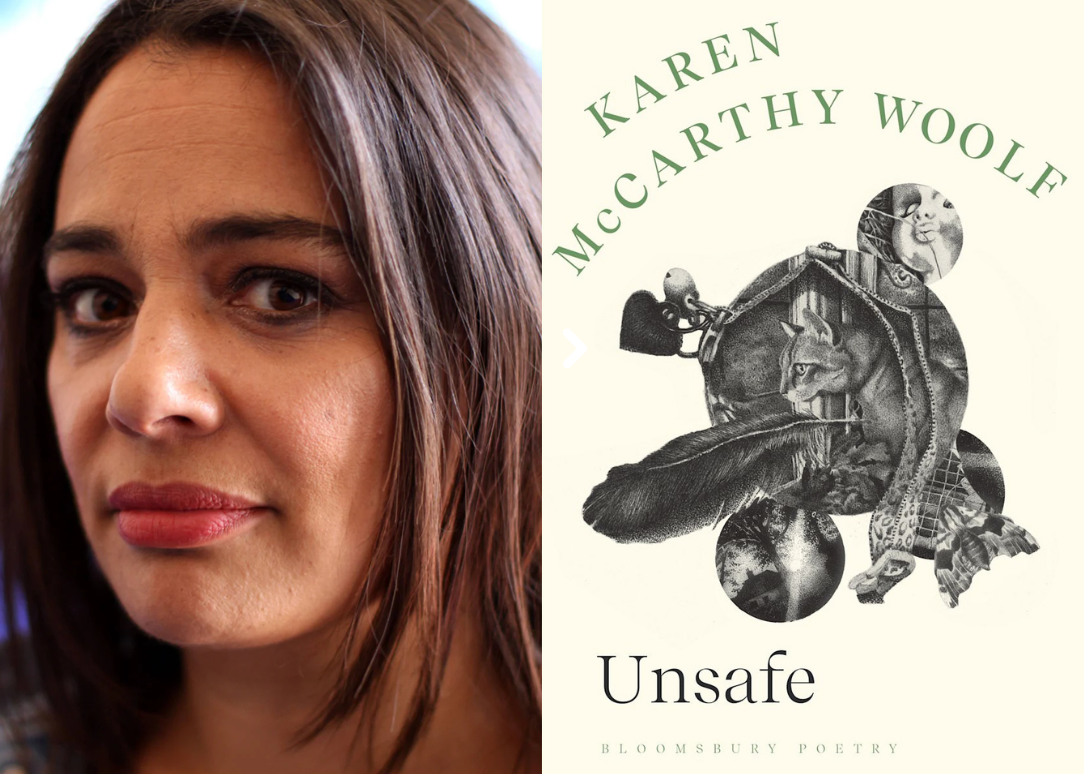
Unsafe - A 21st Century Poetry of Witness
Karen McCarthy Woolf’s new poetry collection Unsafe, published in February 2026, by Bloomsbury, brings together work developed during her residency at The Promise Institute for Human Rights at UCLA School of Law in 2019 and 2020.
As a disenchanted walk through London and Los Angeles, Unsafe shows the effects of capitalism on those who live at its sharp end. It is an immersive meditation on place, the body, nature, and the self, drawing the reader into processes of gentrification and economic disparity, often through unexpected lenses – from trees and tattoos to the totemic qualities of cats.
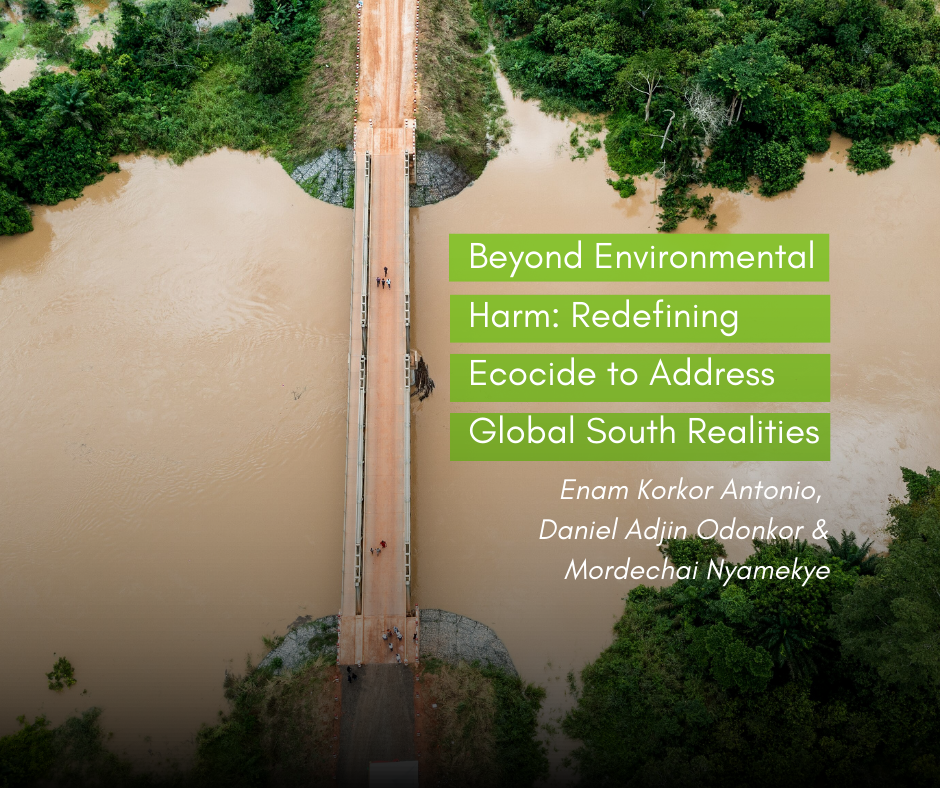
Ecocide Law Bibliography Highlight
A new article has been published in our Special Edition of the International Journal of Human Rights on Ecocide, Human Rights and Environmental Justice!
Enam Korkor Antonio, Daniel Adjin Odonkor & Mordechai Nyamekye’s article Beyond Environmental Harm: Redefining Ecocide to Address Global South Realities through Ghana’s Illegal Mining Crisis argues that current definitions of ecocide inadequately address the environmental and socio-economic realities of the Global South.
Using Ghana’s illegal gold mining (galamsey) crisis as a case study, the authors propose an expanded definition that includes harm to human livelihoods, health, and fundamental rights.